We Are Building the Operating System for Circular Construction
Construction generates enormous material value every day — in demolition, renovation, new construction, contractor yards, and manufacturing facilities. Much of that material retains full functional value, yet defaults to storage or landfill simply because it falls outside the commercial boundaries of a single project.
Green Salvaged Materials (GSM) exists to change that.
We are building the shared infrastructure required to move materials reliably between projects — making reuse standard practice rather than an exception.
This is not about isolated salvage efforts.
It is about system-level coordination.
The Structural Gap
Across restoration, demolition, and new construction, the same pattern repeats:
- Small quantities of matching materials are difficult to source
- Surplus accumulates without a predictable outlet
- Demolition generates recoverable materials with no coordinated pathway
- Engineers lack trusted provenance and validation
- Owners absorb avoidable cost, carbon exposure, and disposal fees
Demand exists.
Supply exists.
But no system connects them.
This is not a behavioural problem.
It is a structural systems gap.
GSM was created to close that gap — by embedding material reuse into the workflows, standards, and logistics of the construction industry itself.
From Individual Effort to Shared Infrastructure
Material reuse has existed in construction for decades — but largely as project-specific, champion-driven initiatives.
When reuse cannot occur within the originating site, materials fall outside scope and disappear from visibility.
GSM moves reuse from isolated effort to shared infrastructure.
By aligning material flows, project workflows, trust frameworks, and logistics coordination, GSM enables reuse to function predictably across projects, portfolios, and regions.
Circular construction cannot scale through intention alone.
It requires infrastructure.
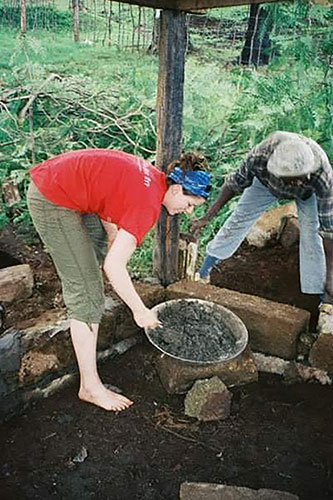


Why I Built GSM
Carly Connor, P.Eng., CAHP
Founder & CEO
I’ve spent my career working with existing buildings — in research, restoration, and national building science leadership roles.
On restoration projects, we routinely needed small, highly specific quantities of materials: matching brick, stone, structural elements, architectural components. At the same time, those very materials were being removed and discarded in demolition projects elsewhere.
Our projects required 200 units.
Minimum orders required 2,000.
Owners absorbed unnecessary cost. Surplus accumulated. Valuable materials were thrown away in one place while being urgently needed in another.
At the same time, across new construction, I saw the same inefficiencies repeat:
- Over-orders and contingency allowances generating excess
- Custom runs becoming instant surplus
- Minor scope changes producing waste
- Contractor yards filling with material that still had full functional value
Each sector was managing its own inefficiencies in isolation.
Construction operates in silos — restoration, demolition, new construction, manufacturing — with very little coordination between them. Yet one sector’s excess was clearly another sector’s solution.
The opportunity wasn’t about improving behaviour.
It was about connecting systems.
Engineering already runs on standards, traceability, accountability, and coordination. Applying that same rigour to material movement across sectors makes reuse practical, predictable, and commercially viable.
GSM was built to connect those silos — turning stranded material into a reliable resource across the construction chain.
Why the World Needs a System — and Why the Moment Is Now
Buildings and construction account for roughly 40% of global carbon emissions. For projects delivering before 2030, embodied carbon — emissions from material extraction, manufacturing, transport, and installation — represents the dominant climate impact.
At the same time, construction and demolition generate the largest waste stream in North America. In Canada alone, millions of tonnes of C&D materials are landfilled annually, despite high technical reuse potential.
This is not simply wasted material.
It is lost carbon, lost value, and lost opportunity.
Across the AEC sector, progress has been significant: electrification, mass timber, embodied carbon standards, green procurement, sustainable finance frameworks. Nearly every dimension of construction is advancing — except the fate of the materials we already have.
Policy frameworks now define what must be measured and reported.
What they do not provide is the mechanism to actually move materials between projects.
Policy defines the what.
GSM delivers the how.
At the same time, market conditions have shifted. Owners, contractors, and designers face increasing pressure to:
- control construction costs
- manage material volatility and long lead times
- reduce embodied carbon
- meet waste diversion targets
- demonstrate ESG outcomes
Reuse directly addresses all of these priorities — but only if it can be operationalized with trust and reliability.
The barrier was never intent.
It was infrastructure.
That barrier has now been removed.
What GSM Is
GSM integrates marketplace infrastructure, brokerage, advisory services, and industry coordination into a single operating system for circular construction.
We facilitate material transactions.
We support project teams.
We provide advisory and implementation services.
We convene industry collaboration.
But none of these functions operate in isolation.
Individually, marketplaces list materials.
Consultants advise on strategy.
Brokers move individual transactions.
GSM connects these roles into shared infrastructure — embedding material reuse directly into construction workflows rather than treating it as a side initiative.
We are building:
- an engineered chain of trust for reused materials
- a coordinated materials platform that connects supply and demand
- standardized workflows that integrate reuse into procurement and delivery
- a cross-industry collaboration layer through the ReUse Collective
Our role is not limited to facilitating a single transaction or delivering a single study.
Our role is to steward the system that allows materials to move reliably, verifiably, and repeatedly across projects, portfolios, and regions.
When brokerage, advisory, logistics, standards, and technology function together, reuse becomes predictable — not opportunistic.
That is the system GSM is building.
Supporting Partners



Follow Us